
Introduction
Backlinks are still one of the most powerful ranking signals in 2026. But the way you build them has changed dramatically. Five years ago, you could get away with buying cheap links, submitting to directories, or using automated link-building tools. Today? Google recognizes purchased backlinks by analyzing a website's history and how backlinks naturally appeared over time.
Every artificial pattern is caught. The companies winning at backlink building right now aren't the ones chasing quantity. They're the ones who stopped measuring success by the number of backlinks acquired and started measuring by the impact those links have on actual business metrics. This guide shows you exactly which backlink strategies work in 2026—and which ones will get you penalized.
1. Quality Over Quantity (The New Rule)
Let's start with the most important shift: In 2026, high-quality content is a must. There's particular emphasis on original research and statistics, in-depth guides vs. short tutorials, and plenty of visuals. Free tools, calculators, and templates are brought to the forefront. One backlink from a high-authority, relevant site beats 100 backlinks from spam sites.
What This Means:
Instead of building 50 low-quality links, focus on building 5-10 excellent ones.
A backlink from a site with:
✅ High Domain Authority (30+)
✅ Relevant content (related to your niche)
✅ Real traffic (thousands of monthly visitors)
✅ Editorial credibility (actual journalists, publications, experts)
...is worth 10x more than a link from a random spam site.
2. The Strategies That Actually Work in 2026

Strategy 1: Create Linkable Assets (Content So Good, People Have to Link)
The shift toward "answer-first" content is one of the most exciting link-building trends of 2026. These are content assets specifically designed to be referenced and linked to repeatedly. Examples include: Data studies and original research, Tools and calculators that solve real user problems, High-quality infographics that summarize complex data.
How to Use This:
Instead of writing another generic blog post, create something worth linking to:
Original Research: Survey 500 people in your industry, compile results, publish findings
Industry Report: Analyze trends in your niche, create data-driven insights
Tools & Calculators: Build a free tool that solves a real problem (SEO checker, backlink analyzer, etc.)
Comprehensive Guides: The ultimate, most complete guide on a topic
Infographics: Visualize complex data in a shareable format
Real Example:
One mid-sized e-commerce company discovered that 67% of their backlinks pointed to discontinued product pages. After redirecting those links and updating their content strategy, they saw a 43% increase in organic visibility within three months.
Strategy 2: Guest Posting (Done Right)
Guest posting still works in 2026, but only if you do it correctly.
Guest posting is one of the most popular backlink-building strategies that works in 2026. You write useful content for another website in your niche. In return, you earn a quality backlink inside the article.
The Wrong Way (What Doesn't Work):
- Writing low-effort articles just to place a link
- Guest posting on irrelevant sites
- Using keyword-stuffed anchor text
- Posting on low-authority blogs just to get a link
The Right Way (What Works):
- Find relevant, high-authority sites (DR 20+) in your niche
- Write genuinely useful content that their audience wants
- Make the backlink natural and contextual
- Build a relationship with the editor/publication
Timeline: Expect 1 quality guest post per month = 1 high-quality backlink per month.
Strategy 3: Broken Link Building (Find Opportunities Your Competitors Miss)
Broken link building is still effective because many websites have old or dead external links. When you create stronger replacement content, site owners may update their pages. This helps you earn relevant backlinks and improve long-term rankings and domain authority.
How It Works:
- Find high-authority sites in your niche
- Look for broken external links (404 errors)
- Create better content on the same topic
- Reach out: "Your page links to a broken resource. We have better content on this topic. Would you consider linking to us instead?"
Success Rate: 20-30% of sites you reach out to will update the link.
Timeline: 1-2 quality links per week using this method.
Strategy 4: Digital PR & Media Mentions
Digital PR backlinks generated through PR and storytelling are highly effective because they deliver high-value, naturally earned editorial links. What works today is content that offers trending angles that journalists genuinely respond to.
How to Get Media Mentions:
- Create newsworthy content (original research, trend analysis, controversial opinions backed by data)
- Use HARO (Help A Reporter Out) to connect with journalists seeking expert sources
- Build relationships with journalists in your industry
- Pitch press releases for genuinely newsworthy company milestones
Quality: Links from news sites, major publications, and journalist coverage are extremely high-quality.
Timeline: 2-3 mentions per month = 2-3 high-authority backlinks per month.
Strategy 5: HARO (Help A Reporter Out)
HARO connects journalists with experts. When you respond to a journalist's request and they use your quote, you get high-quality editorial backlinks. Backlinks come from trusted news websites.
How to Use HARO:
- Go to HARO.com and sign up (free)
- Get 2-3 requests per day from journalists
- Find relevant requests
- Send a brief, valuable response with a quotable insight
- If selected, your quote appears in a news article with a link to your site
Success Rate: If you respond to 10 requests, 2-3 typically get published.
Quality: Links from news outlets and major publications = very high quality.
3. What NOT to Do in 2026 (Avoid Penalties)

❌ Don't Buy Links
Google recognizes purchased backlinks. Google knows the history of a website and how backlinks have naturally appeared over time. Every artificial pattern is caught.
Buying links is a guaranteed path to penalties or "Shadow Banning" (your site loses visibility without warning).
❌ Don't Use Link Farms, PBNs, or Automated Tools
Backlink strategies to avoid include backlink exchange groups, automated link submission tools, blog comment spam, automated link building software, and private blog networks.
These tactics are detected instantly and can destroy your rankings.
❌ Don't Ignore Anchor Text Diversity
Google's algorithm updates throughout 2025 specifically targeted unnatural link patterns. Sites with anchor text diversity below 30% — meaning using the same anchor text more than 70% of the time — experienced an average ranking drop of 15 positions in competitive niches.
What This Means: Mix up your anchor text. Don't use the same keyword 100 times.
Example of good anchor text mix:
- "Learn about SEO strategies" (15%)
- "This guide on ranking" (15%)
- "Check out our backlink post" (15%)
- Brand name (20%)
- Exact keyword (35%)
❌ Don't Rely on Links Alone
In 2026, websites without backlinks can easily have very high rankings. Good SEO strategies, which include high-quality content, have the opportunity to be very successful even without any backlinks.
Backlinks help, but great content + fast site + good UX can rank without them.
4. The 2026 Backlink Building Timeline
Realistic expectations:
Months 1-3: Quick Wins
- Local directories
- Business associations
- Easy outreach
- Expected result: 5-15 quality links
Months 3-6: Medium-Term Growth
- Guest posting
- Broken link building
- Content-based strategies
- Expected result: 15-30 quality links + initial ranking improvements
Months 6-12+: Long-Term Authority
- Digital PR
- Original research
- Comprehensive content assets
- Expected result: 30-100+ quality links annually + significant ranking improvements
5. Measure What Actually Matters
Stop measuring success by the number of backlinks acquired. Start measuring by the impact those links have on your actual business metrics.
Track These Metrics:
Referral traffic - How many visitors come from backlinks?
Ranking improvements - Are target keywords ranking higher?
Conversion rate - Do backlink visitors convert (sign up, purchase, etc.)?
Domain Authority - Is your DR increasing?
Business results - Are you getting leads/sales from organic traffic?
One backlink that drives 100 qualified visitors and 5 sales beats 100 backlinks that drive 10 visitors and 0 sales.
6. The New Reality: Backlinks + Authority + Content

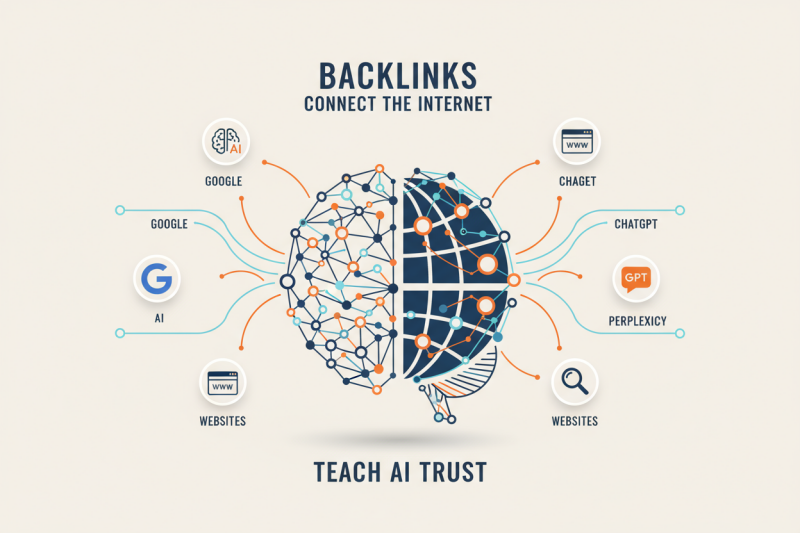
The best brands in 2026 are earning backlinks AND co-citations, training the internet to associate their name with the right topics. Link building in 2026 isn't about chasing PageRank. It's about shaping how your brand is recognized—by people and by machines.
This means:
- Build backlinks from relevant sites ✓
- Get your brand mentioned in articles (with or without links) ✓
- Create amazing content people want to link to ✓
- Build authority across platforms (not just one site) ✓
The Bottom Line
Backlink building in 2026 requires patience, strategy, and genuine value creation.
The companies winning are those who:
- Create content worth linking to
- Build relationships with journalists and influencers
- Focus on quality over quantity
- Measure impact, not just volume
- Stay away from shortcuts and spam
Instead of asking "How do I get 100 backlinks?" ask "How do I create something so valuable that people WANT to link to it?"
That's the mindset that wins in 2026.
FAQ
Q: Do I still need backlinks in 2026?
A: Backlinks are still one of the most important parts of search engine optimization in 2026. Search engines reward websites with quality backlinks from trusted and relevant sources. But quality matters far more than quantity.
Q: How long does backlink building take?
A: Expect 3-6 months to see meaningful results. Building links naturally takes time.
Q: Can I rank without backlinks?
A: In 2026, websites without backlinks can easily have very high rankings. Good SEO strategies, which include high-quality content, have the opportunity to be very successful even without any backlinks. But backlinks accelerate growth.
Q: What's the best backlink source?
A: News outlets, major publications, industry-specific blogs, and educational sites. Links from these sources carry 10x more weight than links from random sites.
Next Steps
- Audit your current backlinks (use Ahrefs or Moz)
- Disavow any spam or low-quality links
- Create one "linkable asset" (original research, tool, or comprehensive guide)
- Start one guest posting outreach campaign this month
- Sign up for HARO and respond to 5 relevant requests
Focus on these four strategies over the next 6 months, and you'll build a strong, sustainable backlink profile.

Add comment
Comments